Reddit
Facebook
Discord
Instagram
TikTok
and more
Mass Delete Your Old Social Media Content from 35+ Sites
Free Trial Download
Why social media policies matter
Social media is now part of how employees, volunteers, executives, teachers, healthcare workers, retail staff, nonprofit teams, and public-facing representatives communicate with the world. That creates big opportunities, but it also creates some risk. A single post can expose confidential information, reveal customer or patient details, violate workplace conduct rules, confuse the public about who speaks for your organization, or create reputation problems that move too fast to contain.
A clear and easy to understand social media policy gives people clear rules before something goes wrong. The best policies explain what employees can post, what they should avoid, when they need approval, how personal accounts differ from official accounts, and where to go when they are unsure.
A good policy doesn’t need to scare employees away from social media. It should help them communicate responsibly while also protecting the organization, its customers, employees, donors, patients, students, clients, members, and community.
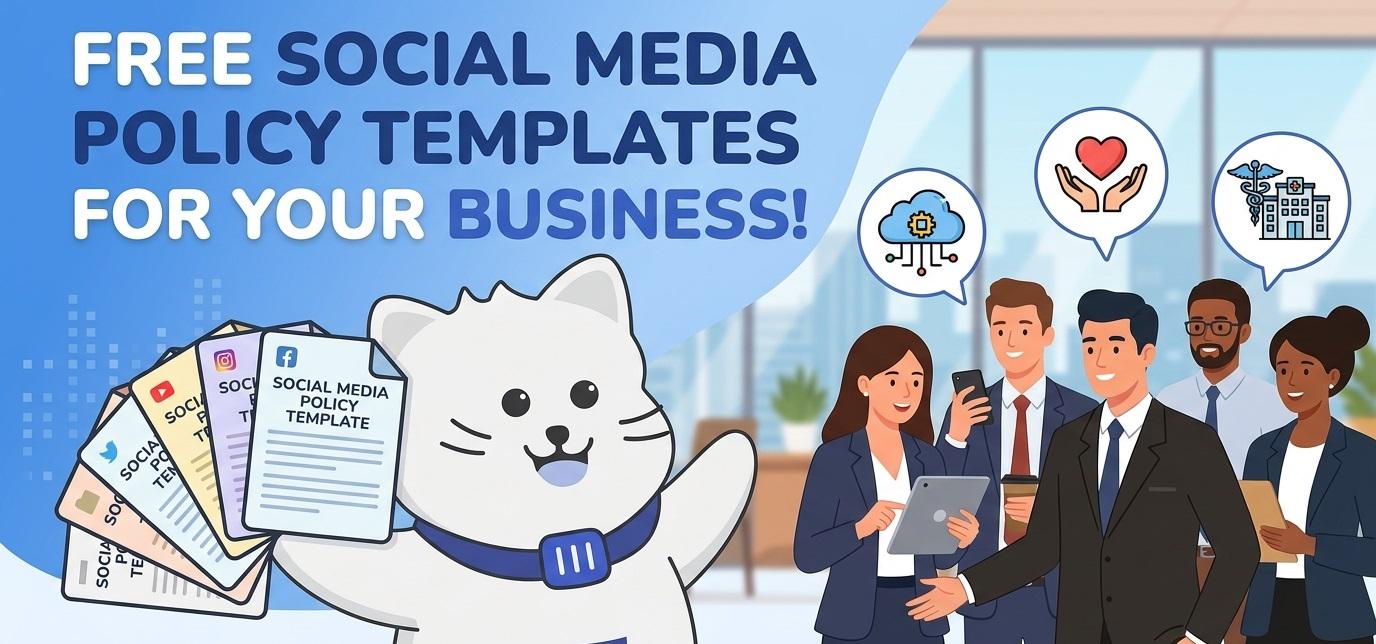
To make this easier, we reviewed public social media policies, codes of conduct, and social media guidance from major organizations across several industries. Then we created downloadable policy templates that organizations can use as a starting point.
Technology companies
Software, SaaS, startups
Policies that shaped this template
Template focus
Built for software companies, SaaS teams, startups, hardware companies, developer platforms, and other technology organizations. Key topics include confidential product information, source code, unreleased features, security incidents, public communications, developer communities, AI-generated content, official accounts, and employee disclosure.
Retailers
Stores, ecommerce, franchises
Policies that shaped this template
Template focus
Built for retail stores, ecommerce brands, franchise operators, warehouse teams, customer service teams, store managers, and retail corporate teams. Key topics include customer privacy, official account access, store photos and videos, promotions, discounts, product claims, reviews, vendor information, employee conduct, and work-time social media use.
Healthcare organizations
Clinics, hospitals, insurers
Policies that shaped this template
Template focus
Built for hospitals, clinics, healthcare systems, pharmacies, insurers, care providers, and health services companies. Key topics include patient privacy, protected health information, patient photos and videos, medical advice, health claims, restricted areas, crisis communication, reviews, testimonials, and professional conduct online.
Financial services
Banks, fintech, advisors
Policies that shaped this template
Template focus
Built for banks, credit unions, wealth management firms, insurance companies, fintech companies, lenders, advisors, and financial service providers. Key topics include customer privacy, financial advice, investment claims, endorsements, recordkeeping, regulated communications, official accounts, public complaints, confidentiality, and fraud prevention.
Education and schools
K-12, colleges, athletics
Policies that shaped this template
Template focus
Built for K-12 schools, districts, colleges, universities, athletic departments, teachers, coaches, counselors, administrators, and education staff. Key topics include student privacy, staff-student boundaries, photos and videos of students, official school accounts, family communication, crisis communication, athletics, classroom content, and protected employee rights.
Religious organizations
Churches, ministries, dioceses
Policies that shaped this template
Template focus
Built for churches, dioceses, ministries, faith-based schools, youth ministries, religious nonprofits, clergy, staff, volunteers, and program leaders. Key topics include ministry accounts, youth communication, minors and vulnerable adults, photo consent, pastoral confidentiality, donor privacy, fundraising, crisis communication, official voice, and respectful public dialogue.
Nonprofits
Charities, foundations, advocacy
Policies that shaped this template
Template focus
Built for charities, foundations, community organizations, advocacy groups, fundraising teams, volunteer-led organizations, and mission-driven nonprofits. Key topics include donor privacy, client dignity, storytelling consent, fundraising claims, volunteer conduct, official accounts, board members, public comments, political activity, crisis communication, and mission-aligned communication.
What these templates have in common
Even though each industry has different risks, strong social media policies usually cover the same core areas.
They explain who can speak for the organization, how employees should separate personal opinions from official statements, when employees or representatives should disclose their connection, and what information must stay private.
They also explain how customer, donor, patient, student, client, member, or beneficiary privacy should be protected. This matters because social media mistakes are often not just tone problems. They can involve private information, confidential records, regulated data, safety issues, or legal exposure.
Most strong policies also cover official account access, public complaints, media requests, crisis situations, employee conduct, harassment, account security, copyright, endorsements, and reporting channels.
The best policies are clear enough for employees to actually use. If a policy is too vague, it does not help anyone. If it is too long or legalistic, people may ignore it. The goal is to give practical guardrails that reduce risk without making social media impossible to use.
Redact.dev – Take Control of Your Company’s Social Media Accounts
A written policy helps employees understand the rules. But companies also need a practical way to help people find and fix old content that may no longer reflect the organization’s standards.
That is where social media cleanup tools can help. Public-facing employees, executives, recruiters, sales teams, healthcare workers, teachers, volunteers, clergy, nonprofit leaders, and brand representatives may have years of old posts, comments, photos, usernames, or public profiles that are easy to forget but still searchable.
A strong social media policy should tell people what the expectations are. A cleanup process helps them act on those expectations before old content turns into a reputation, privacy, compliance, or workplace issue.
Automatically scan, identify, and remove inappropriate content from 35+ different social media platforms.
All deletions process locally on your machine. We never see your data.
Learn More